
Part 1 in a series of articles
You are at a practice night, a touch is being rung and the conductor says this:
“Let’s sort this striking out!”
We’ve all been there. Maybe you’re sitting out and can see the reactions of the ringers. Maybe a very talented ringer who enters prestigious striking competitions nods in agreement. Some of the experienced ringers may look chagrined as if caught out by the schoolteacher for not trying hard enough. Does anyone look panicked, worried, confused?
If you were ringing, what would your reaction be?
Maybe you hadn’t even noticed that the ringing sounded uneven. Or maybe you could tell the striking was bad, but can’t work out if it was your fault, and don’t know how to fix it.
The conductor shouts “listen to it” and you’re saying to yourself: I am listening, but I don’t know what I’m listening for!
We should all be interested in making our striking the best it can be. We are, after all, playing a co-operative musical instrument. We tend to get caught up in bell numbers and blue lines, who to follow, and what my next piece of work is, it’s easy to forget about the sound we are generating. This also tends to be forgotten about when teaching new ringers, but listening, rhythm and striking is a skill that needs to be learnt just as much as handling a bell or ropesight.
So here are my thoughts on the topic, including some exercises to practice.
Three skills
There are three skills that work together to produce good striking: listening, rhythm, and anticipation.
Listening is how we measure the output of what we are doing. We use it to tell if our input (what each ringer in the band are doing) has met the target we were aiming for (each bell striking evenly). It is not just a yes or no answer. It gives us granular information that we can use to correct our input in order to aim for a better result next time.
Rhythm is more tied up with what we are actually doing. The swinging bell has a rhythm of its own, and we are manipulating that to place the bell within the change, where we choose. The difference between a band where each ringer is working to the same rhythm, versus one where the members are ringing to their own rhythm is what makes the difference between good and poor striking.
To keep in time with the rhythm of the whole band, your aim should be to place your bell in the correct place in time within the metre of the rhythm, regardless of what any other external clues might indicate, or if anyone else has made a mistake. Take this example:
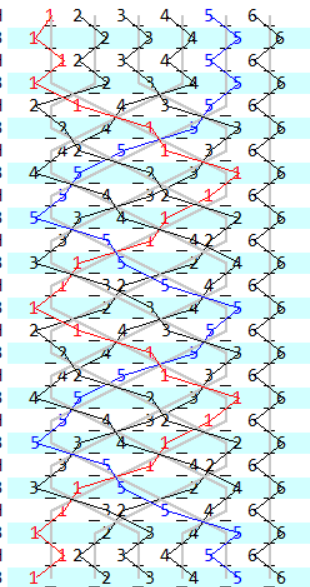
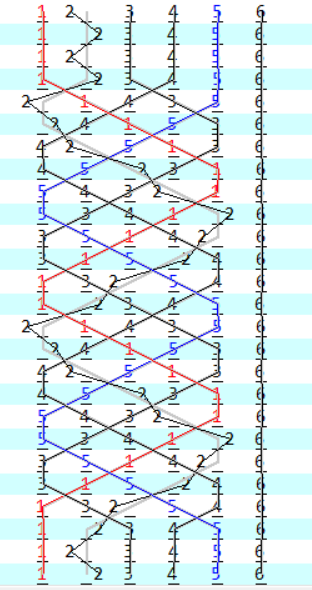
In both diagrams bell number 2 is doing exactly the same thing. In the first diagram the other bells are ignoring even rhythm and are fitting in around bell 2, waiting for them when they are late, and ringing quicker when they are quick. And it’s not just the bell that is immediately after bell 2. All the bells behind are having to hold up and cut in as they try to keep an even distance from the bell in front of them.
In the second diagram the other bells are all keeping to the strict rhythm, placing their bell in time with the overall rhythm. You can guess from the diagram which of the two pieces of ringing should sound better.
Have you ever heard someone learning to play a musical instrument? That part of learning a new piece where they are still working out which notes to play and they are hesitating at every bar. The notes might have been played in the right order, but without the correct rhythm, it’s difficult tell what the tune is.
Anticipation is what we use to tie these two skills of listening and rhythm together. We listen to the ringing; the whole metre of each row and the position of our bell in it. Most importantly for anticipation is being able to rely on the rhythm being consistent from row to row. Playing along with the musical instrument learner mentioned in the previous paragraph is much easier when they have learnt the correct rhythm of the notes because you can anticipate when they are going to play each note. In ringing, we know which place our bell needs to be in in the next row, and with a consistent rhythm we can anticipate when we need to pull our rope.
This means we are not relying on seeing which bell to follow, or having a fraction of a second time delay while we process what we are seeing. We don’t need to remember that you need to leave a bigger gap over the heavy bells, or that you need to be wide following x bell because it is oddstruck. We can stay in the correct place even when the learner has got lost and isn’t quite where they need to be. All because we are anticipating what we need to do, based on what went before.
How to learn good striking
Listening
In this article we shall start by thinking about the skill of listening to bellringing. In the following exercises I have aimed to set them out so that a raw beginner can work through them and improve their skills as they go. If you find one easy, just move on to the next one.
Step 1 – Listen to good ringing.
Before you can listen to badly struck ringing and work out what needs doing to fix it, you need to have some basic listening-to-ringing skills. These include being able to hear the whole row of ringing and know where the start and end of the change is even if the bells are ringing methods. The following exercises can help you develop these skills, as well as tune your ear into actively listening to ringing generally.
Starting with rounds. The bells are ringing in descending order, so this makes it as easy as possible to listen for each bell.
Q: How many bells are ringing? Count each bell as it rings.
(Being able to hear each bell’s individual ‘ding’ comes in useful later when you need to listen to the rhythm of the whole row to work out whether the striking is good or needs improvement.)
And just for fun, here is an approximation of what the bells at the Foundry sound like. Compare it with the 12-bell clip in the group above. Is it more difficult to count how many bells are ringing?
Find the handstroke gap. In change ringing it is usual for there to be a slight gap before the handstroke row starts. So all the bells ring the handstroke, and then all ring the backstroke, but before the next handstroke there is a brief pause, no longer than one bell duration. In these clips the bells are not ringing rounds, which makes it more difficult to count them. But if you listen for the handstroke gap and then start counting, each bell will ring twice before the next handstroke gap. eg. 1 2 3 4 5 6 1 2 3 4 5 6 gap.
Q: How many bells are ringing? If you are finding this tricky, use the clips from the previous exercise where the bells are ringing rounds and listen for the handstroke gap, then try these clips again.
Some more difficult clips now, the bells are ringing a method.
Q: How many bells? These clips don’t start at the beginning of a row, so you definitely need to be able to find the handstroke gap to solve this one!
Relative pitch. You do not need perfect pitch to be able to actively listen to ringing. Most people have relative pitch – being able to tell that one note is higher or lower than another note. This exercise helps you start picking out different bells by their pitch. Use your skill in picking out the handstroke gap to mark the start of the change, and see if you can hear the following:
Q: Can you find the treble? Count the bells to see which position it is in.
Use the clips above, clips 8, 9 and 10, to do this exercise.
Q: Is the tenor covering/ringing behind, or ringing in with the other bells?
In these clips the bells are starting in rounds. Wait until the start the method before working on the exercise.
Q: Can you work out the order of the other bells by their notes? Use the clips above, clips 8, 9 and 10 for this exercise. Tip: just pick one bell at a time, like you did when you were finding the position of the treble, and try to find which position it is in.
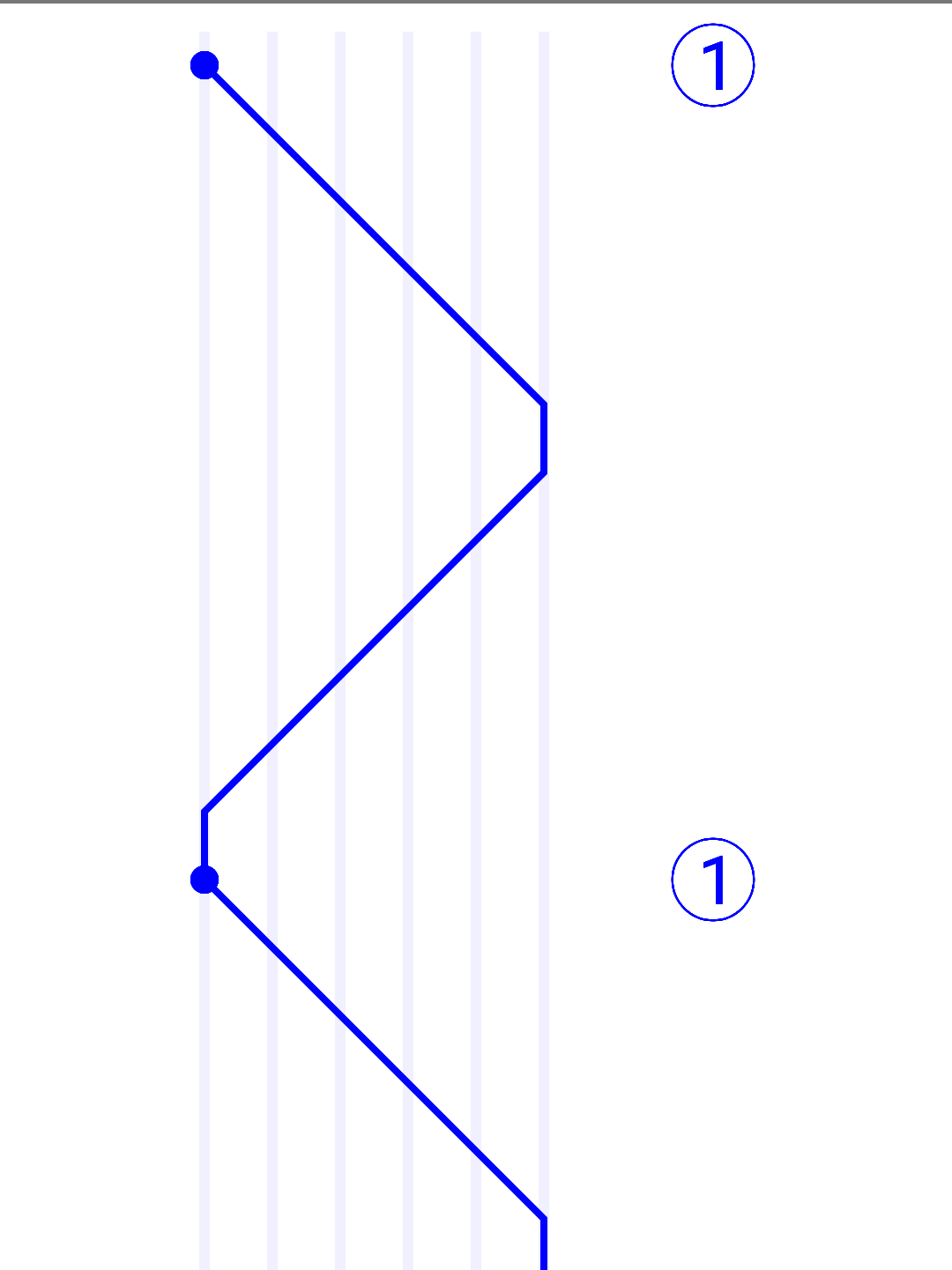
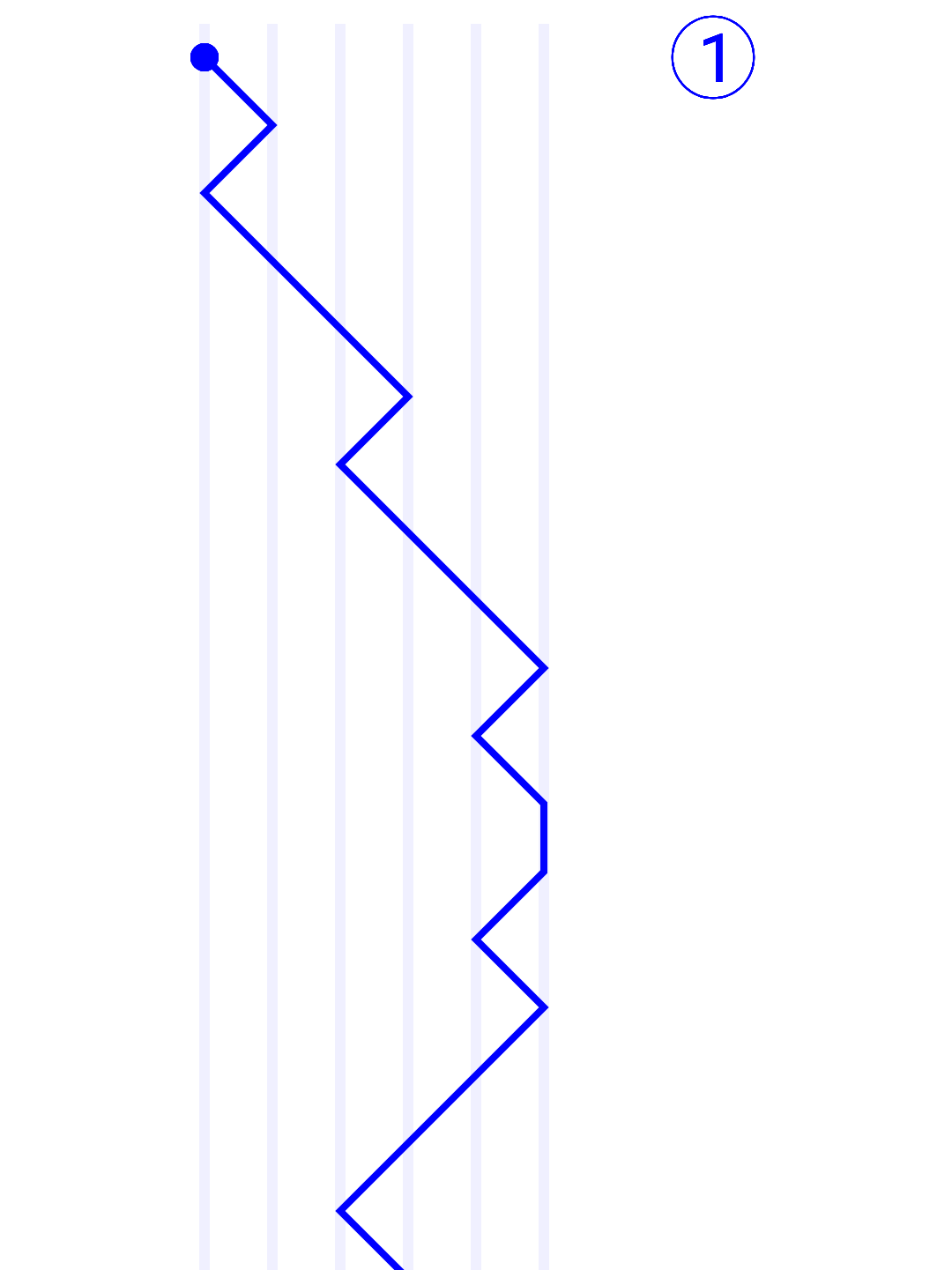
Advanced Q: Is the treble plain hunting, or treble bobbing?
These diagrams show the path the treble takes when plain hunting, and when treble bobbing. (Being able to pick out bells by their relative note will come in useful later when you need to work out how to fix bad striking.)
Q: Which bell is leading? Pick a bell that you can comfortably pick out (try the tenor or treble), try to listen for when it is the first bell in the row.
Use the Method ringing clips, 11, 12, and 13, to complete this exercise.
Advanced Q: In these clips the method being rung means the bell leading doesn’t always ring both the handstroke and backstroke in lead. Can you tell?
In the first two clips, the treble is plain hunting, so try to listen to one of the other bells to see if you can tell if it is leading right, ie at both handstroke and backstroke, or if it is doing something else. For this question you don’t need to work out exactly what it is doing.
(A common striking error is a mistake in when the first bell leads, sometimes too quick or too slow. These exercises help you concentrate on listening for the leading bell. It is also a starting place for working out what a bell is doing by listening to it. I find this easiest to hear when the bell is leading or working on the front.)
The following exercises are more advanced. The skills they teach are more useful if you are going to be trying to help the rest of the band strike better, so you may not think they are relevant to you, but by working at them you will be giving your listening skills a good workout!
Q: can you follow a bell as it plain hunts. Try with the tenor or treble first. Then try an inside bell.
Use clips 12 and 13 to complete this exercise.
Q: Follow the tenor bell, can you tell what it is doing? Count its places, you may find it easiest to write it down as you are listening.
Use clip 25 to complete this exercise.
Q: Here are three clips. In each one the tenor is doing some work in one of the following positions – in 1:2, in 3:4, or in 5:6. Can you tell which one it is?
Q: Try to follow the tenor, which of these blue lines is it ringing? There are two clips, one for each of the following methods. Can you tell by listening to the tenor, which one is which?
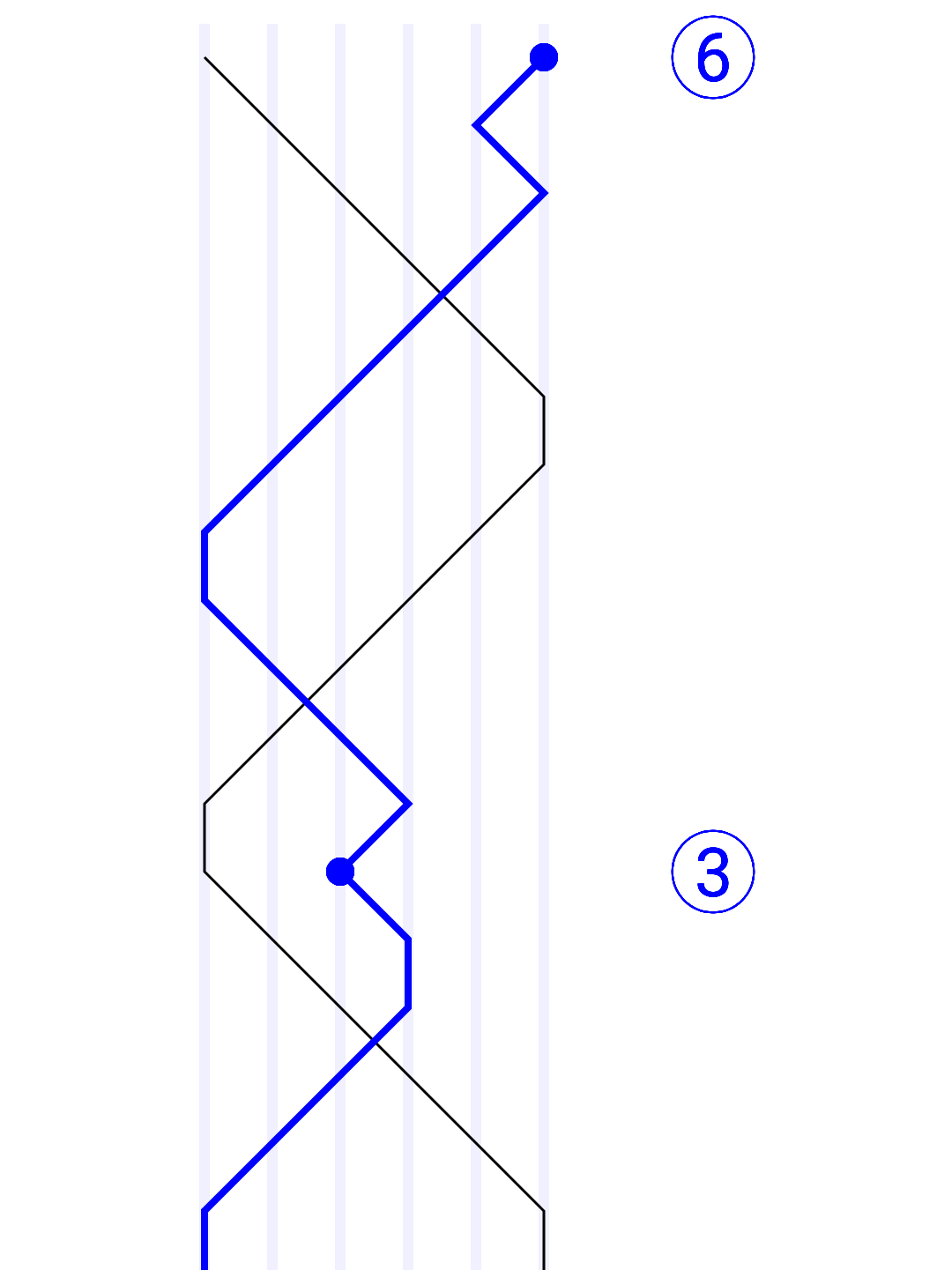
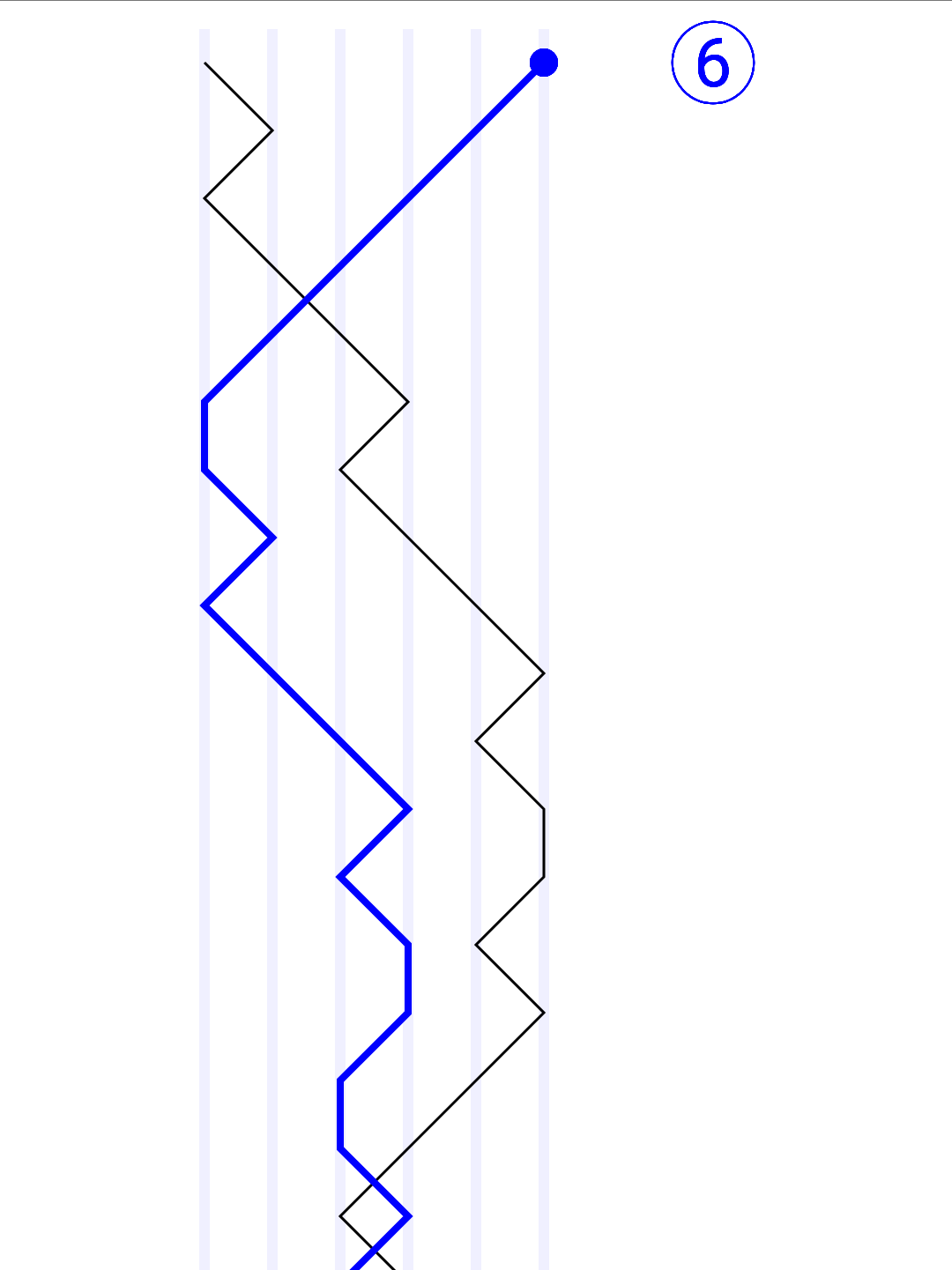
Next Time
In the next part of this article, we shall be looking at rhythm in ringing, and some exercises to practice it.
Rebecca Banner